For a long time, CRM had a very specific job.
It lived close to sales. It sometimes stretched into customer service. In a few organizations, it carried some marketing responsibility as well. But even then, it was rarely viewed as central. It was something teams were asked to use, not something the business was built around.
That framing is starting to change.
Not because CRM suddenly became more powerful, but because businesses have changed the way they operate. Growth is less linear. Customer expectations shift faster. Teams are more interconnected, even when their systems are not. In that environment, tools that only serve one function start to feel limiting because of the disparate nature of single-solution software – AND – those tools get labeled as “not strategic.”
Spoiler alert: any system that isn’t strategic doesn’t hang around long.
CRM is increasingly being asked to play a different role. Not as a replacement for every system, and not as a silver bullet, but as a practical, strategic framework that helps organizations stay coordinated as they evolve.
The Quiet Shift From Tool to Framework
Most organizations today do not struggle to find software. The world is so chalk full of options that they struggle to make sense of it.
Information about customers, projects, billing, service history, and commitments exists. The challenge is that it exists in fragments. People compensate by creating workarounds. Spreadsheets appear. Side systems quietly take hold. Context lives in someone’s head instead of in a shared place – introducing micro-points of failure within an organization’s daily operations.
CRM, when approached intentionally, becomes less about owning every function and more about restoring and centralizing continuity.
It provides a place where relationships are understood over time. Where conversations don’t reset every time ownership of a relationship in any capacity changes. Where decisions are made with awareness of what came before. That doesn’t require CRM to do everything. It requires CRM to strategically sit at the center of how information flows – enabling teams to collaborate more effectively when engaging with customers and prospects.
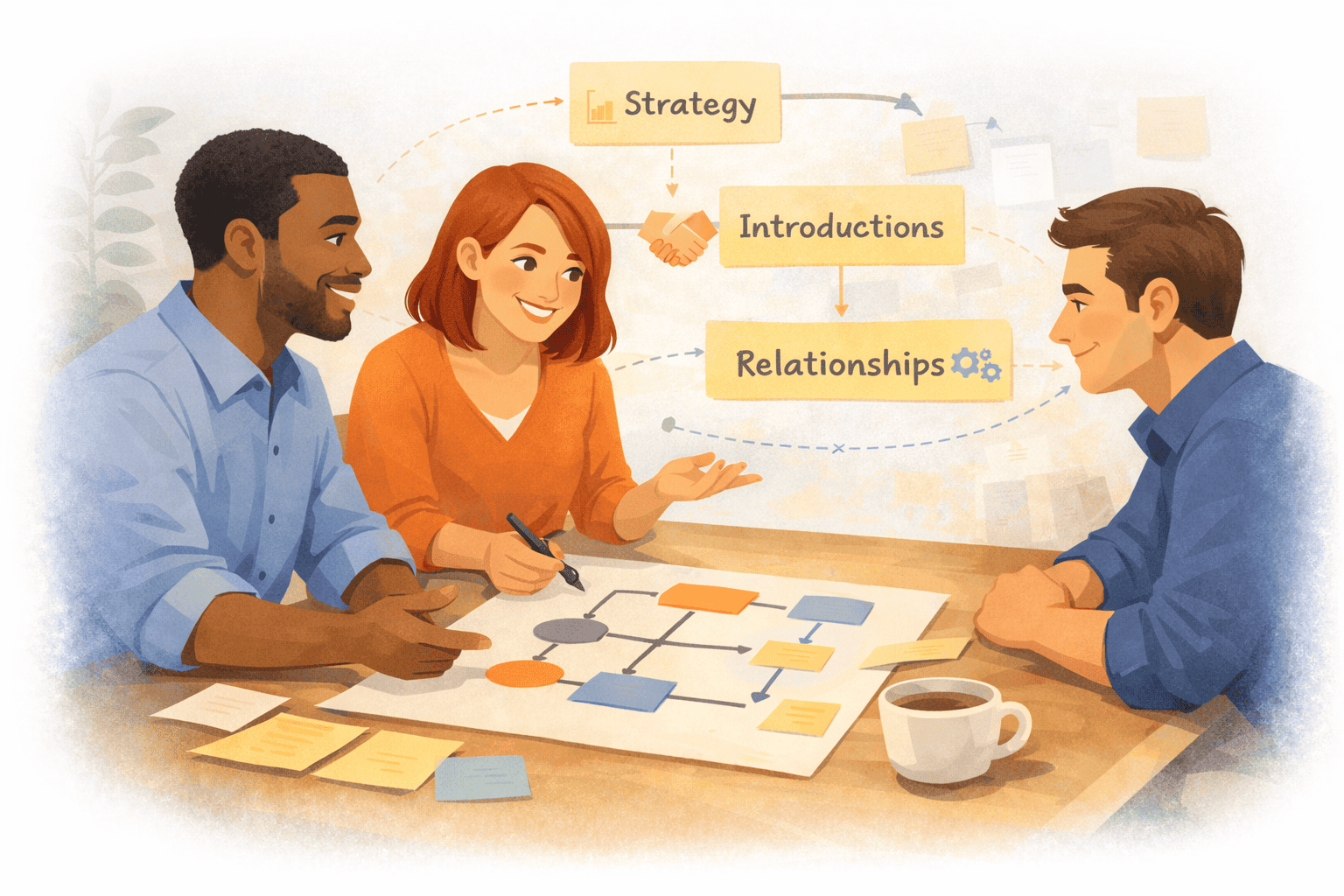
This is where many companies have their first “aha” moment. CRM does not need to replace accounting systems, ERPs, or industry-specific tools to be valuable. It needs to make them easier to live with – and what that means is subjective to each organization.
A Place to Start, Not a Place to Stop
One of the most overlooked strengths of modern CRM platforms is that they allow businesses to grow into complexity without being swallowed by it.
Early on, CRM might handle basic relationship tracking and visibility. As the organization matures, it can support more nuanced workflows. When a need becomes specialized enough that another system is clearly the right answer, CRM doesn’t have to compete. It can integrate, coordinate, and step back where appropriate – taking a facilitation role instead of an ownership role.
This is an important distinction.
Businesses get into trouble when they treat CRM as either too small to matter or too big to challenge. In reality, its value often comes from being adaptable. It provides structure without demanding permanence. Teams can build what they need when they need it, without committing to an all-or-nothing architecture too early.
That flexibility is what allows CRM to support growth without locking the organization into decisions that no longer fit a year later.
Where Alignment Actually Happens
When CRM is positioned as shared infrastructure, something subtle starts to change inside the organization.
People stop thinking of it as “their” system or “someone else’s” system. It becomes the place where work connects. Not in an abstract sense, but in very practical ways. Handoffs become clearer. Assumptions get challenged earlier. Gaps surface before they become problems. Potentially interested parties can be tagged in seamlessly to raise awareness.
This is where alignment between people, processes, and systems becomes real instead of aspirational.
CRM does not create alignment on its own. But it makes misalignment visible. And once teams can see where things break down, they can fix them with intention rather than guesswork.
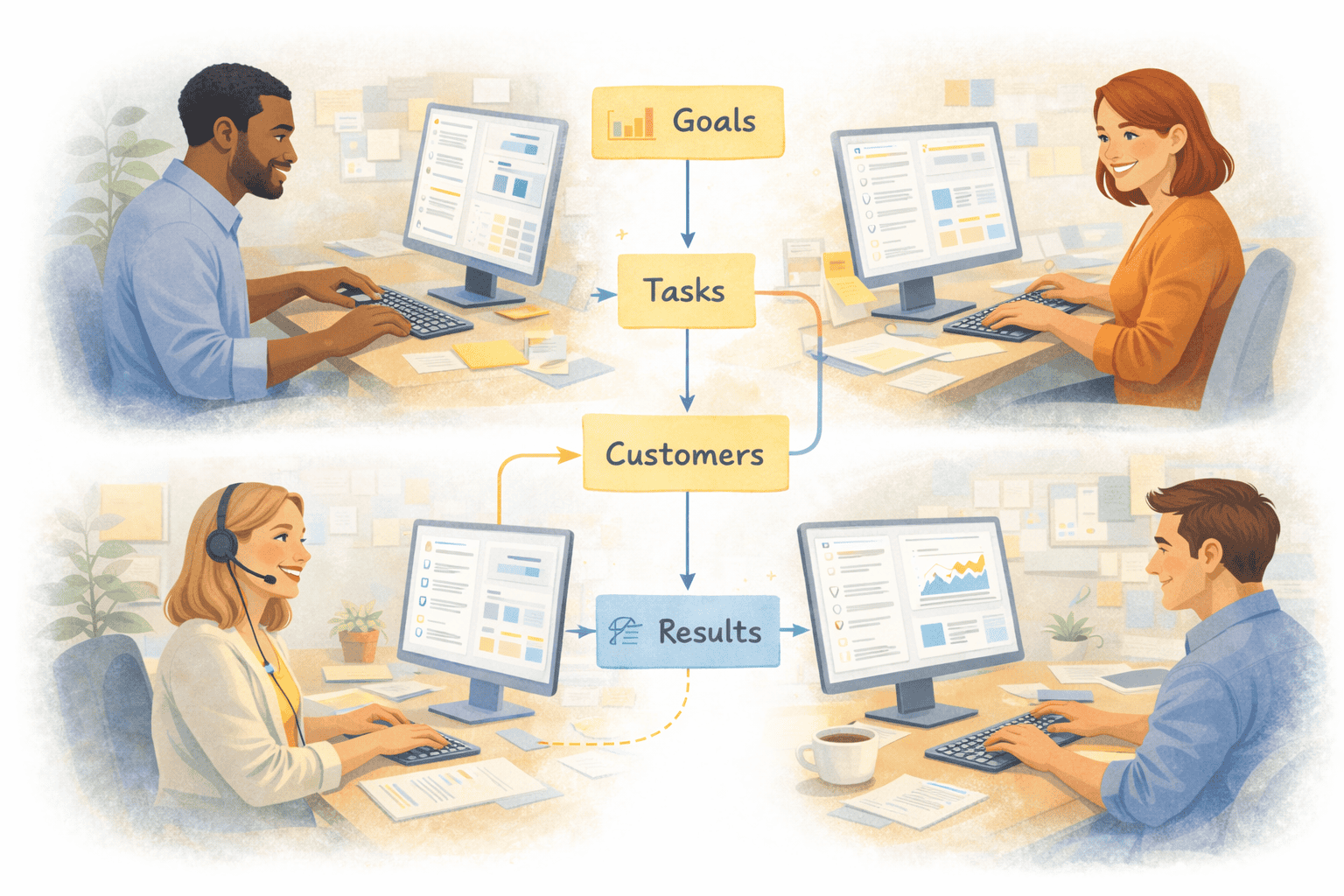
That visibility is often more valuable than any single feature.
Agility Without Overdependence
There’s a real concern many leaders have but rarely articulate out loud. They want agility, but they don’t want to become dependent on a single piece of software that defines how everything must work.
CRM, used well, helps navigate that tension.
It offers consistency without rigidity. Teams can adjust processes, test new approaches, and integrate new tools without constantly re-architecting the business. At the same time, there remains a stable reference point for how relationships are managed and commitments are tracked.
This balance is especially important for small and mid-sized organizations. They need systems that support change without requiring a transformation project every time something shifts. More importantly, they can’t risk a system being a massive investment while creating more liabilities for growth than it does benefits and pathways for growth.
CRM becomes the steady ground that experimentation can stand on – especially if that CRM has development environments from which to test theories and possibilities.
The Question That Changes Everything
The most meaningful shift isn’t technological. It’s conceptual.
Instead of asking whether a CRM has the right features, more organizations are asking what role CRM should play in how they operate day to day. That question leads to better decisions, fewer forced compromises, and systems that feel supportive instead of burdensome.
CRM is no longer just a place where data lives. In many businesses, it’s becoming the framework that helps everything else move in the same direction while acting as a helpful triage unit or facilitator to ensure both customers and employees are guided in a direction that yields the most consistent positive outcome.
That’s not flashy. It’s not hype-driven. But it’s exactly what growing organizations need.